
Al-Shuhada Street. 2008.
Al-Shuhada Street. 2011.
"Liberation. Return. Rebuilding." 2008.
"Liberation. Return. Rebuilding." 2011.
Above the painting it is written:
ויש תקוה לאחריתך נאם יהוה ושבו בנים לגבולם
ירמיה 31:17
The children have returned to their own border.
A side note to translating לגבולם: Luther 1545: Und deine Nachkommen haben viel Gutes zu gewarten, spricht der HERR; denn deine Kinder sollen wieder in ihre Grenze kommen. // King James Version: And there is hope in thine end, saith the LORD, that thy children shall come again to their own border. / Jer 31:17
French versions (http://saintebible.com/jeremiah/31-17.htm):
Tes enfants reviendront dans leur territoire
et tes fils reviendront dans leurs confins.
et tes enfants retourneront en leurs quartiers.
German versions (http://bibeltext.com/jeremiah/31-17.htm):
die Kinder sollen heimkehren in ihr Gebiet!
und deine Kinder werden in ihr Gebiet zurückkehren.
English versions (http://bible.cc/jeremiah/31-17.htm):
Your children will return to their own land.
Your children will come again to their own land.
and your children shall come back to their own country.
And your children will return to their own territory.
and your children will come back to the land which is theirs.
גבול can be translated as: border (state, country), borderline, boundary, limit, frontier, line, margin, extreme, bounds
-ל can be translated as: to, toward, of, for, until, till, into
Google translate offers, when it comes to לגבולם:
come home
to their borders
their borders
have come home
How it is no longer orange
No change.
Yes change.
Egged at your service.
The sun was shining.
I doubt the sun paled the orange away.
No no.
The white of all.
The "Day of Rage".
That was that.
Home-border-line syndrome.
Three years later - Hebron. Or: How it is no longer orange.
Buch / Care

nobody will know II
February 16th 2011
Through a gate I entered a park and looked at a statue. I asked a woman with strongly painted eyebrows and a light brown jacket (matching the colour of her dog's hair) if there was another exit, back to the train, she said there was not, I could only walk a circle and get back there, but would I not better be afraid as there was this man and he was watching me the whole time - I hadn't realized that this was the case - I said maybe I was not afraid and would have a look and thank you very much.
Ducks stood on melting ice. A lot of bridges. And leaves on the ground. The trees had names pinned into their skin. White paper. Sans Serif Italics. Little brook was wild.
No man came.
The woman, ten minutes later, outside the park, did not react to my smile of recognition. But she really cared. She was wearing a jacket matching the colour of her dog's hair.
That is care.
Safe train back. Until one tree fell on the rails. That was way inside.
Void III
Bear me a child
Bury your hand
deep in the mild
cleft of my sand
Sing of a sun
of dark shadows' age
of moving undone
of birds in a cage
Of wings close and
spread around a face
like a hand
circling a place
Bear me a child
your soul's gentle hand
I shall hold. Your wild
song it will free your land
Void I
January 3rd 2011
Void II
January 3rd 2011
Als (II)
als wir so lagen
im Graben
der Welten
und es schoss
durch den Wind
das Andere her
der Wind
und das Haus
und das Zittern
im Hier
als wir so lagen
im Graben
der Welten
die Winde
die wehten
die Welten
vorbei
als wir so lagen
im Graben
der Welten
dort
wo es dunkel
dort
wo es still
dort
wo es war
dort oben
im Graben
der Welten
da liegen
vielleicht
da lagen
vielleicht
die Lügen
vielleicht
der Liebe
Als (II)
Wir so lagen
January 22nd 2011
maze

maze
December 2010/January 2011
Man kann alles erzählen, nur nicht sein wirkliches Leben; - diese Unmöglichkeit ist es, was uns verurteilt zu bleiben, wie unsere Gefährten uns sehen und spiegeln, sie, die vorgeben, mich zu kennen, sie, die sich als meine Freunde bezeichnen und nimmer gestatten, daß ich mich wandle, und jedes Wunder (was ich nicht erzählen kann, das Unaussprechliche, was ich nicht beweisen kann) zuschanden machen - nur um sagen zu können:
"Ich kenne dich."
Max Frisch - Stiller
Burg-sight
I read something in Haaretz today. Which I like (like many articles they publish, seriously), not only like, deeply appreciate in many ways. Avraham Burg's latest book sure has interesting approaches, as does his article:
Marrying the Dalai Lama
Reaching out and accepting family members who are not of Jewish origin will greatly expand the boundaries of contemporary Jewish existence.
By Avraham Burg
The letters of the rabbis and the rabbis’ wives are arousing all the dormant Israeli demons. Although sometimes it seems as though the demons are already wearing down, they still have the power to frighten us and cause damage.
The first reaction is automatic and loud: Gevalt! Racists! The second reaction is also predictable: “What is hateful to you do not do to your neighbor,” or how, in light of our own history, we are doing exactly the same things to others.
The next reaction is far more thoughtful and profound: Am I really prepared to marry someone who is not a member of the Jewish people?
I encountered the first part of the question several years ago. A smart, secular and enlightened friend told me: “Avrum, I agree with all your humanistic opinions, but I must admit that if my son brings home a non-Jewish woman, it will cause me heartache.”
“And if he brings home a Jewish man?” I asked.
After a long hesitation he replied frankly: “I prefer a gay Jewish man to a non-Jewish woman.” For him, as for many others, the key is the “Jew” within him rather than the loving person within his son.
I recently encountered the first part of the answer in a courageous and penetrating article published by Edgar Bronfman, former president of the World Jewish Congress, which included a call to reopen the tent of our father Abraham in all four directions. To contain among ourselves, to stretch out our hands and to adopt the family members who are not of Jewish origin, and they are many. Not to tear apart and exclude, but to greatly expand the boundaries of contemporary Jewish existence.
Fortunately I am already very happily married, but this question awaits me with my children. They travel all over the world, study and with open minds meet Christians and Muslims. Some of their best friends are Orthodox Jews. And like that same friend, I have reached the age at which I have to answer myself frankly, what will my viewpoint be if one of their partners isn’t Jewish?
My answer is very simple. For me the test is not their Judaism. The first and almost the only perspective by which I examine my children’s friends is whether or not they are good people. The Jewish consideration is not the first one.
These are my considerations only. I have no authority over my children’s lives. I speak to them, and that’s all, and in the conversation I always want their happiness. One of the foundations of family happiness is a life of partnership, and the secret of genuine partnership is a common value system.
So this is the time to ask what Judaism is. When people say Jew, what do they mean? In the eyes of those letter-writing rabbis and rabbis’ wives and all their simplistic and fanatic believers, Judaism is first and foremost a genetic description, a connection of blood and race of “anyone born to a Jewish mother.”
And therefore those very same people pile up so many difficulties, and try to deter the converts who want to join our community. In the eyes of Judaism it is a connection to content and commitments; a glorious civilization (which is presently fighting for its life and its future), which is mainly a values-based, humanistic system, embracing all of humanity.
That is why a person’s origin is far less important to me than his core principles and his lifestyle. I divide all my worlds into the good and the bad. I totally reject the tacit assumption that all the Jews are on our side and all the gentiles are against us. There are wicked and terrible Jews, and there are good and righteous gentiles. And between them I prefer the latter, because of their goodness, and I despise the former, in spite of their Jewishness.
An eternal Israel will continue to exist and advance only if openness defeats seclusion, only if the Jewish people overcome the ignorant among them.
In order to understand the significance of the argument for everyday life you sometimes have to take the theory to absurd lengths.
Let’s say that one of my daughters were to introduce me to two possible sons-in-law: the Dalai Lama, whom she loves with all her heart and soul, or Rabbi Meir Kahane, whom she is willing to marry only because of his Jewish genetic origin.
And let’s also suppose that she were to say: Dad, choose for me. My choice would be clear and unequivocal: The Dalai Lama would become my son-in-law, beloved as a son and admired as a true partner in a way of life and principles of existence. Over the years and with patience I would work hard together with him to build bridges of understanding between the truth of his life and the foundations of our family. Together we would create a far broader family spirit than a narrow-minded Judaism of limited horizons. Even though the Tibetan priest does not speak Hebrew, he lives in the “Jewish language.”
On the other hand, if she chose Kahane or one of his successors, only because he is a Jew by origin and in spite of his disgusting language and base values, my world might fall apart.
I would probably pull myself together and do everything possible to be with her in any future she might have, but my heart would know and weep: She too is a racist.
(Haaretz-Link and Edgar Bronfman's article)
The Laundry
I actually like going to the nearby self-service laundry. In the times there I have met quite a diverse amount of people, talked to several and enjoyed staring at the ever turning machines with a slightly dizzy sense of joy.
Today was no difference.
The laundry also seems a place where the Rabbis and their wives have no say in who is allowed to wash. It does not seem to matter who you are as long as you bring three coins of five shekel.
Today was no difference.
When I arrived two of the three machines were running and one was empty. An old, seemingly fragile woman was there, and I asked her if she was finished, if I could use the machine (in Hebrew), she said yes. I filled the machine. And sat. She was about to go and had a lot of things. I asked her in English if she wanted some help carrying it up the stairs. She started yelling and shouting in Hebrew that this was Eretz Israel, that she does not want to hear English, I did not understand the rest. It was frightening. I started crying when she left, and was really shaken. She came down on me like a harpy. The shop owner next door said she was crazy. A man came and saw his bag was gone, he was Ethiopian, I gave him one of mine, he said thank you, emptied his machine and left. A woman from Sri Lanka came and waited with me. The old woman came back and in perfect British English started shouting again. She hated the English. Was I English. No. I said I just wanted to help you, sorry. She does not want my fucking help. Was I German. Yes. Was I Jewish. No. See, I had no idea what's going on, she would not need my help. She would not want it. Where was I born. Dresden. She knew someone, very nice, hard working man from there. So was I an Ossi. I said I was from Dresden which is in the East of Germany. Was I an Ossi. The GDR was still in existence when I was born. I had no idea about the Jewish people, I should go back to the Ossis to prevent them from turning Nazis. She would not want help. I was crying the whole time. The woman from Sri Lanka stood nearby and said nothing. The old woman left. I asked the woman from Sri Lanka if she had a tissue. She had not. She asked what happened. I told her I asked the old woman if she needed or wanted help and she started yelling at me. The woman from Sri Lanka said she was here for three weeks now to be a care giver as so many other women and men from Sri Lanka and the Philippines. I wished her the best and hoped she met people who treat her respectfully.
I learn how these things work and experience them as the "other" which I may not have experienced before in Germany, where my white skin seems to "prevent" me from discrimination. Now that I come to think of it, it is a bit ironic that some time in the summer this man on the train in Berlin said they forgot to put me on the transport to the gas chambers in Auschwitz.
Worte von der Naht

imagine
November 22nd 2010
Inspiration: MOTS. Heute die derzeitige Ausstellung des Museum On the Seam "The Right to Protest" gesehen.
Auf dem Weg zum Museum von meiner Wohnung in Nachlaot, da hin, Richtung Osten laufend, durchquere ich Mea Shearim, ein ultraorthodoxes Viertel. Ich weiß nicht immer, auf welcher Straßenseite ich zu laufen habe. Die Busse da hin, die benutze ich nicht. Hosen tragend ist mein Wohlgefühl beim Durchqueren der Straßen eingeschränkt.
Blicke töten vielleicht nur den, der sie empfängt.
Ich sehe nach unten. Auf dem Boden ein benutztes Kondom. In der Bäckerei kann ich einkaufen (Es gibt schon wochenlang Pfannkuchen, auch wenn Chanukah erst noch kommt). An mancher Ladentür steht "Please only enter my shop dressed modestly". Gesittet mache ich Raum für Männer in Schwarz und Frauen mit zwei Lagen Sittsamkeit auf dem Kopf. Die Kinderwagen klagen mich nicht an. Die Sammelbüchsen an den Häuserwänden schweigen mich bittend an. An manchem Torbogen lese ich "We are not Zionists".
Im Osten, die große Straße, die zum Damaskustor führt, überquerend, gibt mir die Sonne ein deutliches Ja zum Ablegen meiner Jacke. Das hat sie auch zuvor getan, aber da war das Nein der Sittsamkeit viel lauter. Eben also diese Naht überquere ich, ein Stück noch und ich erreiche das American Colony Hotel. Da gibt es einen Buchladen. Da arbeite ich jetzt. Und mein Chef da, der verspricht, mich zu schelten, wenn ich im Rock kommen sollte, der nur der Sittsamkeit, nicht aber dem Wohlgefühl dient.
Worte erreichen vielleicht nur den, der sie lesen kann. Mots. Worte. Ausstellung lesen. Protestieren. Gesittet um Zeilen feilschen. Dass jeder sich eintragen kann in die Öffentlichkeit und ihr Vokabular der Ko-Existenz.
Die Sprache ist kein dem Für-Andere-sein hinzugefügtes Phänomen: sie ist ursprünglich das Für-Andere-sein, das heißt, das Faktum, daß eine Subjektivität sich als Objekt für andere erfährt. In einem Universum bloßer Objekte kann die Sprache in keinem Fall "erfunden" werden, da sie ursprünglich einen Bezug zu einem andern Subjekt voraussetzt; und in der Intersubjektivität des Für-Andere ist es nicht notwendig, sie zu erfinden, denn sie ist in der Anerkennung des anderen schon gegeben. Allein deshalb, weil, was ich auch tue, meine frei geplanten und ausgeführten Handlungen, meine Ent-würfe auf meine Möglichkeiten hin draußen einen Sinn haben, der mir entgeht und den ich erfahre, bin ich Sprache.
Jean-Paul Sartre, Das Sein und das Nichts, 652
A crowded place

du und ich und hier
November 21st 2010
Und dann habe ich an Hans Blumenbergs Theorie der Unbegrifflichkeit gedacht. Die Fallen der Begriffe, der Zaun (גדר) der Definition (הגדרה). Einpferchen des Lebens. Ein Netz von hin und her gespannten Grenzschnüren. Stolpern. Hängenbleiben. Alarmgeheul. Es gibt Zäune. Fallen. Hinfallen. Sich zu verhalten wissen. Oder still.
Sein.
...
there I saw hope barbed as barbed wire.
And i said to myself: That's true, hope needs to be
like barbed wire to keep out despair,
hope must be a minefield.
Yehuda Amichai
Buberlese

Die Augen des Tiers
November 6th 2010
So vieles kann die Kruste der Dinglichkeit nie durchbrechen! O Glimmerstück, welches anschauend ich einst zuerst verstand, daß Ich nicht etwas "in mir" ist, - mit dir war ich dennoch nur in mir verbunden; nur in mir, nicht zwischen mir und dir hat es sich damals begeben. Wenn aber eins hervorsteigt aus den Dingen, ein Lebendes, und mir Wesen wird, und sich in Nähe und Sprache zu mir begibt, wie unabwendbar kurz ist es mir nichts als Du! Nicht die Beziehung ist es, die notwendig nachläßt, aber die Aktualität ihrer Unmittelbarkeit. Die Liebe selber kann nicht in der unmittelbaren Beziehung verharren; sie dauert, aber im Wechsel von Aktualität und Latenz. Jedem Du in der Welt ist seinem Wesen nach geboten, uns Ding zu werden oder doch immer wieder in die Dinghaftigkeit einzugehn.
Martin Buber, Ich und Du
Waiting for Godot
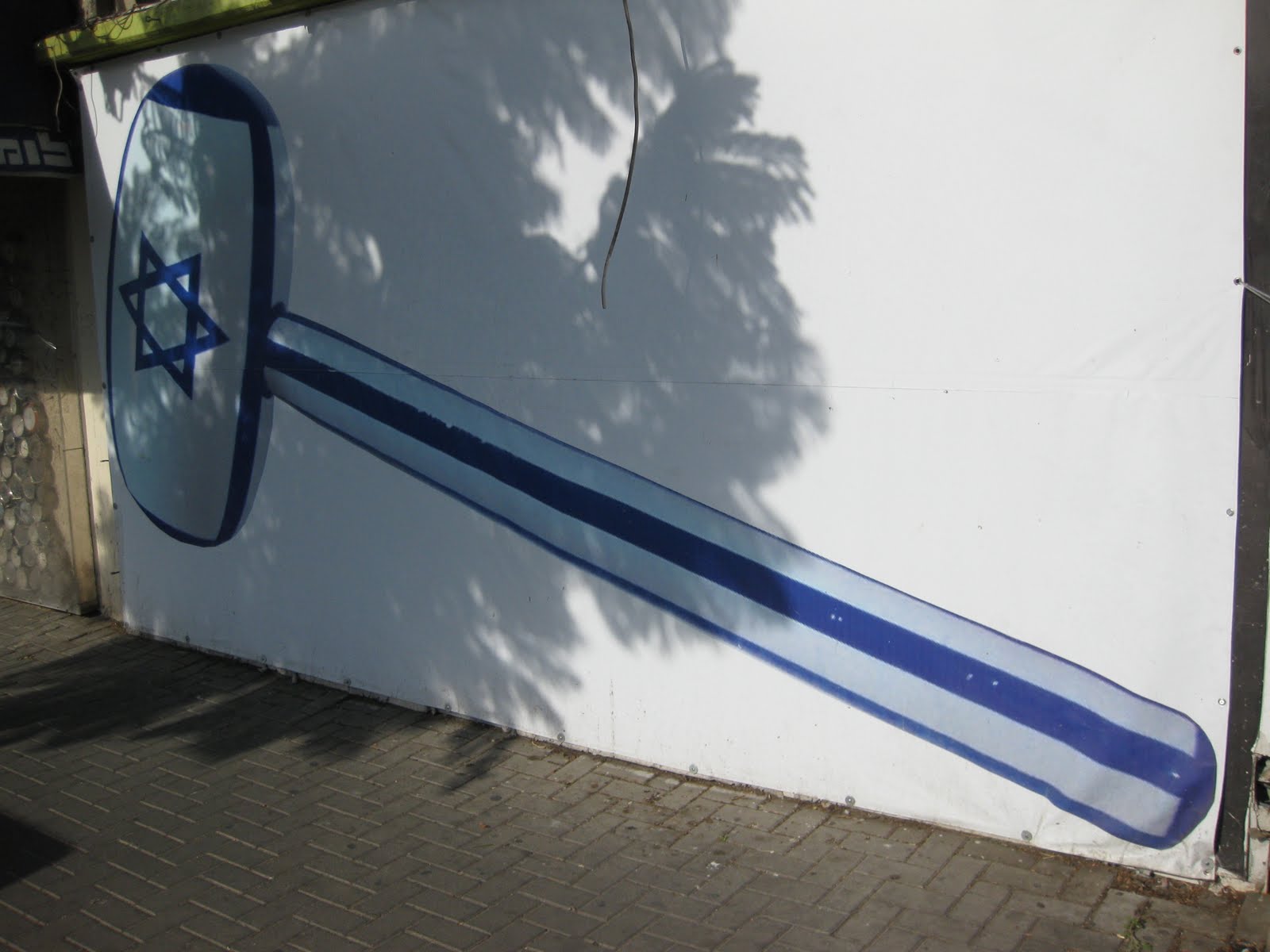
Gummihammer.
Gefährlich.
Lotto.
Lösungsmittel.
Baywatch.
Finde den Fehler.
Auf der Straße.
one book

another book

