... Notes on a Protest Movement
I.
These busy intersections, plenty of buses, cars, bikes, pedestrians – all in a rush getting somewhere other than this place. The streets of Tel Aviv know the hum, the honk, the hustle, particularly since the middle of July 2011, when a rather unprecedented level of socio-political awareness started getting a hold of an impressively increasing amount of (predominantly Jewish) Israeli citizens. The streets, Rothschild Boulevard most prominently, now not only know about the hum, the honk, the hustle, but are learning to host all sorts of people’s desiring and demanding calls for a rather blurry concept of “social justice”. Faced with an outrageously high cost of living which forces a lot of people formerly known as a “middle class” to work several jobs and still perceive their lifestyle as precarious, “the people demand social justice” (Hebrew “ha’am doresh tzedek chevrati”) now. And here. Be it during the massive demonstrations in Israel’s urban hubs or peripheral cities, be it in between a circle of tents during a public lecture or over a beer on someone’s terrace – “the people” in its and their heterogeneity talk, discuss, move ideas and engage in lively debates. Whereas during the first weeks of the growing protest movement the media and the struggle’s representatives constantly reiterated an non-political (whatever that may have been), solely social understanding of their plight, more recently the surprisingly non-disappearing connection between Israel being an occupying and oppressive state with a yearly security budget in the billions and therewith lacking financial backing elsewhere, has risen to a non-negotiable (oh, I meant non-negligible, silly) fact on the ground (or rather – in the heads) of this grassroots movement and media representations thereof.
These moments of shifts, these ruptures in societal and socio-political constitutions, they are, one could argue, even more prone to know the hum, honk and hustle accompanying it. Some of these alliterations not only concern language but also are bloody serious, result in burning streets, dead people, and dictators in cages.
Some others are fun. Or rather fun that makes one wonder.
II.
So, there are three actual intersections. Busy ones. Within the bigger context of a seemingly hot-headed, impolite and chaotic – qualities that are unquestionably perceived differently in different places and habitualized forms of socialization. I grew up in Germany, and lived in England – public sphere, which I am currently part of, interrupting the chaotically choreographed order of things is not usually met with cheers and smiles. Arguably, the ruptures described above are so far being met with an understanding and supportive public response and participation.
One might presume it has to do with so many individuals’ own immediate needs and frustration that are suddenly on the forefront of a collective protest, and some form of desire for unity within this struggle seems to suggest itself as the way to go. A person’s own urgent and tangible will for change of their way of living is, apparently (and almost sadly so, given the fact that in most cases these needs are obviously intertwined with others’), a rather motivating force for activism. “I have a problem, therefore I act.” is easier said and done than, “I see you have problem, which may or may not have something to do with me, therefore I act.”
Patience.
III.
“If not now – when?” … Not only part of one of Hillel’s most famous sayings (“If not us – who” precedes the time), but also a chorus line of Yehoram Gaon’s “Od lo ahavti dai” (I have not yet loved enough), a catchy and sunny tune, frequently used for big circle dances that have had their share in a Zionist identity formation during the first decades of the State of Israel.
This song now, and, “If not now – when?”, is played at these busy intersections one Tuesday evening in August. A portable speaker placed in the middle of the road, and suddenly, out of a regular group of pedestrians waiting for the traffic lights to allow them passing, a group of about 30 to 40 people emerges, forms a circle and dances, claps, jumps and sings along. Two and a half minutes the intersection is blocked. Pedestrians see, halt, look, some smile, some are obviously irritated. Drivers are faced with people on the street, which does not seem something most of them appreciate. Many cars and motorbikes meander around the circle, forcing it into some other, more elliptical form, breaking apart the chain of hands joint. Bus drivers argue with wild gestures, impatient passengers are pointing at their watches, metal pushes into people. It is fun, frighteningly so. One would think – people, it is two and a half minutes, why can’t you just let them do their thing? Why push push push? The shove of metal pushes people down, almost.
However, at such a time when push comes to shove, now, more precisely, one wonders why and how people react to interruptions of their being so aggravated, so annoyed, so ignorant. What makes one form of rupture okay, and another one a problem one needs to deal with aggressively? To which level are people here, now, willing to let others voice their concern, their being, in a public sphere?
Public Movement who organized these three little public interventions facilitated a sense of uncertainty for the people being faced with it (and, partially, for the participants too, I am sure) – How does this action relate to the current protest? Why are they dancing a folk-dance? Who are these people, there is no banner, no shouting, no youth-group-shirt? Why are they doing this? Why the fuck are they blocking the damn road and make me be late for this appointment by two and a half minutes? Why this song? Who are they? What do they want? How am I supposed to react? Can I join in? Do I like it? What do I like about it? Would I like to join in? Why am I so angry when someone is 1.) apparently having fun and 2.) is really not that violent or bad?
Am I getting my way? Is that what the angry reactions were asking? Am I getting my problem solved by their action? Do they have a problem? Would I want to listen? Engage with them afterwards? Would I want to know? Why would I want to know? Does it relate to my problems and me?
IV.
I have no patience.
I demand social justice.
Now.
Yes.
How long is now?
V.
Rupture.
Reflection.
How long is now?
Buch / Care

nobody will know II
February 16th 2011
Through a gate I entered a park and looked at a statue. I asked a woman with strongly painted eyebrows and a light brown jacket (matching the colour of her dog's hair) if there was another exit, back to the train, she said there was not, I could only walk a circle and get back there, but would I not better be afraid as there was this man and he was watching me the whole time - I hadn't realized that this was the case - I said maybe I was not afraid and would have a look and thank you very much.
Ducks stood on melting ice. A lot of bridges. And leaves on the ground. The trees had names pinned into their skin. White paper. Sans Serif Italics. Little brook was wild.
No man came.
The woman, ten minutes later, outside the park, did not react to my smile of recognition. But she really cared. She was wearing a jacket matching the colour of her dog's hair.
That is care.
Safe train back. Until one tree fell on the rails. That was way inside.
Burg-sight
I read something in Haaretz today. Which I like (like many articles they publish, seriously), not only like, deeply appreciate in many ways. Avraham Burg's latest book sure has interesting approaches, as does his article:
Marrying the Dalai Lama
Reaching out and accepting family members who are not of Jewish origin will greatly expand the boundaries of contemporary Jewish existence.
By Avraham Burg
The letters of the rabbis and the rabbis’ wives are arousing all the dormant Israeli demons. Although sometimes it seems as though the demons are already wearing down, they still have the power to frighten us and cause damage.
The first reaction is automatic and loud: Gevalt! Racists! The second reaction is also predictable: “What is hateful to you do not do to your neighbor,” or how, in light of our own history, we are doing exactly the same things to others.
The next reaction is far more thoughtful and profound: Am I really prepared to marry someone who is not a member of the Jewish people?
I encountered the first part of the question several years ago. A smart, secular and enlightened friend told me: “Avrum, I agree with all your humanistic opinions, but I must admit that if my son brings home a non-Jewish woman, it will cause me heartache.”
“And if he brings home a Jewish man?” I asked.
After a long hesitation he replied frankly: “I prefer a gay Jewish man to a non-Jewish woman.” For him, as for many others, the key is the “Jew” within him rather than the loving person within his son.
I recently encountered the first part of the answer in a courageous and penetrating article published by Edgar Bronfman, former president of the World Jewish Congress, which included a call to reopen the tent of our father Abraham in all four directions. To contain among ourselves, to stretch out our hands and to adopt the family members who are not of Jewish origin, and they are many. Not to tear apart and exclude, but to greatly expand the boundaries of contemporary Jewish existence.
Fortunately I am already very happily married, but this question awaits me with my children. They travel all over the world, study and with open minds meet Christians and Muslims. Some of their best friends are Orthodox Jews. And like that same friend, I have reached the age at which I have to answer myself frankly, what will my viewpoint be if one of their partners isn’t Jewish?
My answer is very simple. For me the test is not their Judaism. The first and almost the only perspective by which I examine my children’s friends is whether or not they are good people. The Jewish consideration is not the first one.
These are my considerations only. I have no authority over my children’s lives. I speak to them, and that’s all, and in the conversation I always want their happiness. One of the foundations of family happiness is a life of partnership, and the secret of genuine partnership is a common value system.
So this is the time to ask what Judaism is. When people say Jew, what do they mean? In the eyes of those letter-writing rabbis and rabbis’ wives and all their simplistic and fanatic believers, Judaism is first and foremost a genetic description, a connection of blood and race of “anyone born to a Jewish mother.”
And therefore those very same people pile up so many difficulties, and try to deter the converts who want to join our community. In the eyes of Judaism it is a connection to content and commitments; a glorious civilization (which is presently fighting for its life and its future), which is mainly a values-based, humanistic system, embracing all of humanity.
That is why a person’s origin is far less important to me than his core principles and his lifestyle. I divide all my worlds into the good and the bad. I totally reject the tacit assumption that all the Jews are on our side and all the gentiles are against us. There are wicked and terrible Jews, and there are good and righteous gentiles. And between them I prefer the latter, because of their goodness, and I despise the former, in spite of their Jewishness.
An eternal Israel will continue to exist and advance only if openness defeats seclusion, only if the Jewish people overcome the ignorant among them.
In order to understand the significance of the argument for everyday life you sometimes have to take the theory to absurd lengths.
Let’s say that one of my daughters were to introduce me to two possible sons-in-law: the Dalai Lama, whom she loves with all her heart and soul, or Rabbi Meir Kahane, whom she is willing to marry only because of his Jewish genetic origin.
And let’s also suppose that she were to say: Dad, choose for me. My choice would be clear and unequivocal: The Dalai Lama would become my son-in-law, beloved as a son and admired as a true partner in a way of life and principles of existence. Over the years and with patience I would work hard together with him to build bridges of understanding between the truth of his life and the foundations of our family. Together we would create a far broader family spirit than a narrow-minded Judaism of limited horizons. Even though the Tibetan priest does not speak Hebrew, he lives in the “Jewish language.”
On the other hand, if she chose Kahane or one of his successors, only because he is a Jew by origin and in spite of his disgusting language and base values, my world might fall apart.
I would probably pull myself together and do everything possible to be with her in any future she might have, but my heart would know and weep: She too is a racist.
(Haaretz-Link and Edgar Bronfman's article)
The Laundry
I actually like going to the nearby self-service laundry. In the times there I have met quite a diverse amount of people, talked to several and enjoyed staring at the ever turning machines with a slightly dizzy sense of joy.
Today was no difference.
The laundry also seems a place where the Rabbis and their wives have no say in who is allowed to wash. It does not seem to matter who you are as long as you bring three coins of five shekel.
Today was no difference.
When I arrived two of the three machines were running and one was empty. An old, seemingly fragile woman was there, and I asked her if she was finished, if I could use the machine (in Hebrew), she said yes. I filled the machine. And sat. She was about to go and had a lot of things. I asked her in English if she wanted some help carrying it up the stairs. She started yelling and shouting in Hebrew that this was Eretz Israel, that she does not want to hear English, I did not understand the rest. It was frightening. I started crying when she left, and was really shaken. She came down on me like a harpy. The shop owner next door said she was crazy. A man came and saw his bag was gone, he was Ethiopian, I gave him one of mine, he said thank you, emptied his machine and left. A woman from Sri Lanka came and waited with me. The old woman came back and in perfect British English started shouting again. She hated the English. Was I English. No. I said I just wanted to help you, sorry. She does not want my fucking help. Was I German. Yes. Was I Jewish. No. See, I had no idea what's going on, she would not need my help. She would not want it. Where was I born. Dresden. She knew someone, very nice, hard working man from there. So was I an Ossi. I said I was from Dresden which is in the East of Germany. Was I an Ossi. The GDR was still in existence when I was born. I had no idea about the Jewish people, I should go back to the Ossis to prevent them from turning Nazis. She would not want help. I was crying the whole time. The woman from Sri Lanka stood nearby and said nothing. The old woman left. I asked the woman from Sri Lanka if she had a tissue. She had not. She asked what happened. I told her I asked the old woman if she needed or wanted help and she started yelling at me. The woman from Sri Lanka said she was here for three weeks now to be a care giver as so many other women and men from Sri Lanka and the Philippines. I wished her the best and hoped she met people who treat her respectfully.
I learn how these things work and experience them as the "other" which I may not have experienced before in Germany, where my white skin seems to "prevent" me from discrimination. Now that I come to think of it, it is a bit ironic that some time in the summer this man on the train in Berlin said they forgot to put me on the transport to the gas chambers in Auschwitz.
Worte von der Naht

imagine
November 22nd 2010
Inspiration: MOTS. Heute die derzeitige Ausstellung des Museum On the Seam "The Right to Protest" gesehen.
Auf dem Weg zum Museum von meiner Wohnung in Nachlaot, da hin, Richtung Osten laufend, durchquere ich Mea Shearim, ein ultraorthodoxes Viertel. Ich weiß nicht immer, auf welcher Straßenseite ich zu laufen habe. Die Busse da hin, die benutze ich nicht. Hosen tragend ist mein Wohlgefühl beim Durchqueren der Straßen eingeschränkt.
Blicke töten vielleicht nur den, der sie empfängt.
Ich sehe nach unten. Auf dem Boden ein benutztes Kondom. In der Bäckerei kann ich einkaufen (Es gibt schon wochenlang Pfannkuchen, auch wenn Chanukah erst noch kommt). An mancher Ladentür steht "Please only enter my shop dressed modestly". Gesittet mache ich Raum für Männer in Schwarz und Frauen mit zwei Lagen Sittsamkeit auf dem Kopf. Die Kinderwagen klagen mich nicht an. Die Sammelbüchsen an den Häuserwänden schweigen mich bittend an. An manchem Torbogen lese ich "We are not Zionists".
Im Osten, die große Straße, die zum Damaskustor führt, überquerend, gibt mir die Sonne ein deutliches Ja zum Ablegen meiner Jacke. Das hat sie auch zuvor getan, aber da war das Nein der Sittsamkeit viel lauter. Eben also diese Naht überquere ich, ein Stück noch und ich erreiche das American Colony Hotel. Da gibt es einen Buchladen. Da arbeite ich jetzt. Und mein Chef da, der verspricht, mich zu schelten, wenn ich im Rock kommen sollte, der nur der Sittsamkeit, nicht aber dem Wohlgefühl dient.
Worte erreichen vielleicht nur den, der sie lesen kann. Mots. Worte. Ausstellung lesen. Protestieren. Gesittet um Zeilen feilschen. Dass jeder sich eintragen kann in die Öffentlichkeit und ihr Vokabular der Ko-Existenz.
Die Sprache ist kein dem Für-Andere-sein hinzugefügtes Phänomen: sie ist ursprünglich das Für-Andere-sein, das heißt, das Faktum, daß eine Subjektivität sich als Objekt für andere erfährt. In einem Universum bloßer Objekte kann die Sprache in keinem Fall "erfunden" werden, da sie ursprünglich einen Bezug zu einem andern Subjekt voraussetzt; und in der Intersubjektivität des Für-Andere ist es nicht notwendig, sie zu erfinden, denn sie ist in der Anerkennung des anderen schon gegeben. Allein deshalb, weil, was ich auch tue, meine frei geplanten und ausgeführten Handlungen, meine Ent-würfe auf meine Möglichkeiten hin draußen einen Sinn haben, der mir entgeht und den ich erfahre, bin ich Sprache.
Jean-Paul Sartre, Das Sein und das Nichts, 652
A crowded place

du und ich und hier
November 21st 2010
Und dann habe ich an Hans Blumenbergs Theorie der Unbegrifflichkeit gedacht. Die Fallen der Begriffe, der Zaun (גדר) der Definition (הגדרה). Einpferchen des Lebens. Ein Netz von hin und her gespannten Grenzschnüren. Stolpern. Hängenbleiben. Alarmgeheul. Es gibt Zäune. Fallen. Hinfallen. Sich zu verhalten wissen. Oder still.
Sein.
...
there I saw hope barbed as barbed wire.
And i said to myself: That's true, hope needs to be
like barbed wire to keep out despair,
hope must be a minefield.
Yehuda Amichai
Waiting for Godot
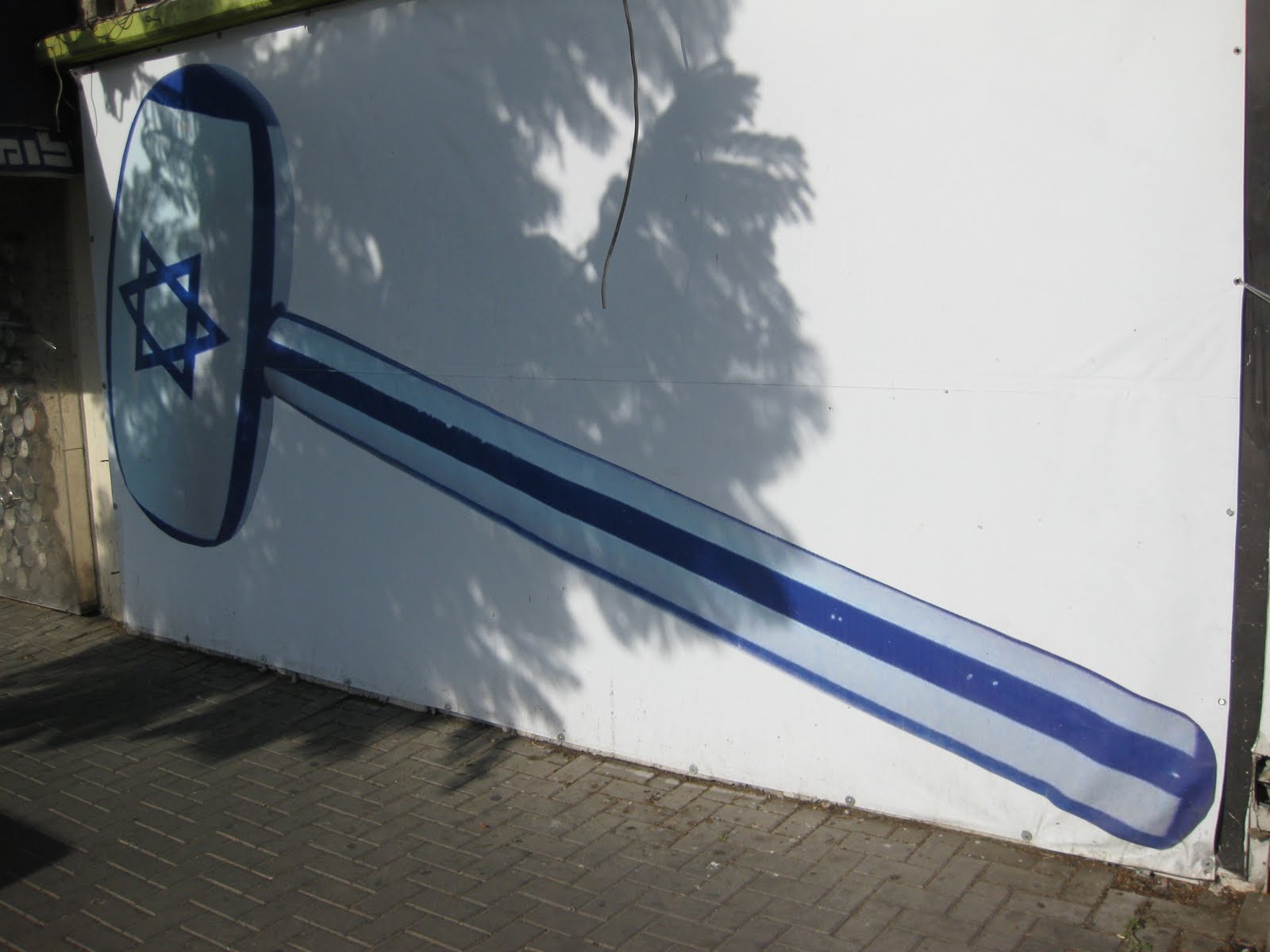
Gummihammer.
Gefährlich.
Lotto.
Lösungsmittel.
Baywatch.
Finde den Fehler.
Auf der Straße.
Hillel fragen?
"Wenn ich nicht für mich bin, wer ist dann für mich? Solange ich aber nur für mich selber bin, was bin ich? und: Wenn nicht jetzt, wann sonst?" (Hillel, Sprüche der Väter 2,8)
"?אם אין אני לי, מי לי? וכשאני לעצמי, מה אני? ואם לא עכשיו, אימתי"
Is Meat Murder? Is You Me?
Know Hope in Kafkanistan
Klone (d'Air) Condition
Sleepy. Hugging. Sleepy. Live in the Blue.
Real(ly) - Don't deport me, not now, paradise is on top of me.
Anhänglich. Aufgehoben. Eingesogen. Ihrs.
Jesus on the Edge.
Leben? Im Film!
Drei Vogelfälle.
Früher Vogel geht schwimmen
Es verging bisher kein Morgen, den ich nicht eigentlich, auf eine gewisse Weise, gerne länger schlafend verbracht hätte. Wenn um fünf Uhr früh ist, scheint auch halb acht durchaus verlängerbar. Aber immerhin, ich schlafe.
Zudem lebe ich mich ein, einleben heißt auch - schlafen.
Auf dem Campus der Universität bin ich gewesen und habe meinem Professor davon erzählt, wie ich das erste Mal, als ich wirkliche Palmen sah, beinahe geschrien hätte. Auf dem Campus befindet sich auch das Diasporamuseum - Beit Hatfutsot, neben dessen Eingangsdesk eine Wand ist, mit Videobildschirmen, auf denen ständig wechselnde Portraits zu sehen sind. Darunter steht: "You are part of the story". Mit Noam habe ich mich dort getroffen, der da auch arbeitet, und gemeinsam waren wir in der Ausstellung "Andy Warhol and Israeli Artists Present: Jewish Icons" .
War gut. Sehr.
Es ist noch immer sehr heiß.
Noch immer war ich nicht am Hafen.
Und auf den Weg nach Jaffa muss ich mich auch noch machen.
Aber ich war im Tanztheater. Mit hübschen Tänzern und guter Musik. "Distanz" im Tzavta. Gut. Weil gestern Freitag gewesen ist, fing die Vorstellung schon um zwei Uhr nachmittags an.
So ist das.
Nachher Volkstanz am Strand.
in Dnegev

Sonne, LKW, Gaza
Nicht nur, dass der Monat Oktober hier in Tel Aviv so eine Art Schwellenphase für mich darstellt. Mehr und immer Heterotopien braucht der Mensch, also - auf in die Wüste. Das kleine feine Indie-Festival in Dnegev bot Gelegenheit, Sterne, Menschen und Sand zu sehen. Mit Hila und Itamar also von Rehovot (und wieso schluckt die Schranke am Südausgang der Bahnhofsstation, da, Richtung Weizmann-Institut, mein Ticket und ich muss drüber klettern?) aus da hingefahren, viel Essen und The Shins und The XX im Auto.
Ein schönes, liebevoll gestaltetes Festivalgelände, so Installationen überall, ein kleiner Friedhof mit offenem Sarg für die ganz Müden, Gaza 50 km entfernt (und da geht die Sonne unter, am Abend Horden von Menschen Richtung Westen laufend - wo gehen die nur hin?), super Duschen, immer Klopapier da, wenig Schlaf, Arak, viel Chakchuka zum Frühstück, das wahrscheinlich kleinste Zelt der Welt für drei Personen, hellgrüne Augen der Zeltnachbarin, die Veterinärmedizin studieren möchte, vor der Bühne viele Menschen, über ihnen eine Wassersprühanlage, feine Perlen auf die Menge, eine Deutsche rennt früh durchs Zeltlabyrinth und verteilt Kuchen "ohne Drogen, aber es ist viel zu viel", Sterne, sehr viele Sterne.
Hilas Initialen sind der Beginn des Wortes "hafti'a" (Überraschung), Itamars "esh" (Feuer) und meine "kaf" (Hand), so dass wir drei zusammen logischerweise sehr viel Spaß hatten.
Überall Sand, auch zwischen den Zähnen.
cheap guys cost less
Verdrängungsareal
Heim nach Yishkon. Das Wort Yishkon, heißt, ich glaube, "wohnen", "residieren". Der Prophet Bileam, der für den König der Moabiter, Balik, das Jüdische Volk verfluchen sollte, bekam von Gott die Warnung, dies nicht zu tun. (Er hatte auch eine sprechende Eselin.) Nach mehreren gescheiterten Versuchen, die letztlich in Segen endeten, kam die Prophezeiung, wohl als Segen und Fluch interpretierbar, "hen am levad yishkon" heraus - "ein Volk, das allein leben wird".
Da wohne ich also.
Da
Wenn ich mich recht entsinne, war das letzte musikalische Highlight auf Dizengoff der Mann, der da sang "Chai Chai Chai, gam ani od chai". Heute nun, ein Saftstand, es spielt sich in den warmen winterzeitlichen Dunst Glenn Gould und seine Interpretation der Goldbergvariationen von Bach.
Aus den Fugen könnte also nicht nur ich sein, sondern auch die Zeit selbst. Der Herbst, den ich versäume, ich verbringe ihn am Strand spazierend, warmen Sand zwischen meinen Zehen, liege lesend und in den Himmel sehend auf meiner Terrasse, jedenfalls doch der, die mir temporär gehört. Sie scheint mir die einzige zu sein, die "natürlich" Wind hat. Verlängerte man Yishkon, das kleine Gässchen, auf dem ich wohne, hin zum Meer, ist der Wind jedoch auch noch nicht von großen Hotelbauten gebremst, die das weiter nördlich gelegene Stadtgebiet weitestgehend windstill machen. Städtebaulich lebe ich also nicht nur auf dem jemenitischen Weinberg, sondern auch in einem der wenigen nicht als Bauhaus erkenntlichen windigen Ecken des Frühlingshügels.
Zudem lohnt sich anzumerken, dass dieses Foto tatsächlich in meiner Wohnung aufgenommen wurde, und schlagender Beweis für die Existenz erfolgreich globalisierter Chamäleons scheint.
Wenn sich jemand, ein netter Juwelier, ob seiner mir gegenüber getätigten "lashon hara" entschuldigt, muss auch ich mich sehr deutlich fragen - wenn meine Zunge, meine (zumindest doch hebräische) Sprache nur als "ra meod" (sehr schlecht) zu qualifizieren ist, wie viel Leben und Tod in meinen Händen liegt. Die Sprache wird mehr, und ich bin doch auch erst ein paar Tage hier. Nicht mal ein paar. Wenige. Aufpassen. Zügeln. Zunge und Taten.
Hinsehen und laufen.
Durch den Sand.
Der Straßen.
Morgen in die Wüste.
Sterne sehen.
Durch den Sand.
Den Wind in den Augen.
die bienen brummen
auf der langen, der sehr langen straße, der mit dem asphalt, und rings umher stufen und formen und verschiedenes von grün. und unten eben grau, auch verschieden. es liegt am rand, das war zu erwarten, da am rand, wo das gras, das mindestens eine grüne sache ist, das gras wächst, da liegt am rand, ich gehe vorbei, und das ist die wahrheit, es war ja erst heute, da liegt ein mann, so mit längeren haaren und der liegt da, und ich denke, er schläft. in jedem fall habe ich mich erschrocken, dass dieser mann da lag, so plötzlich, so links neben mir. es ist ja sommer. und ich war allein. und der asphalt. also, das grün, das mit dem mann drin. und oben sitze ich und schaue und werde ganz klein und unten im wald, plötzlich, da läuft der mann, vielleicht schleppt er sich auch, er läuft und in der einen hand ist eine tüte, oder zwei, und eine gelbe kunststoffverpackung, und in der anderen, da in der anderen hand, da hält er ein stück rohes, dunkles fleisch, so groß wie sein handteller. und dann, und dann, dann führt er es, es passt ja auch zum grün, und darin hat er sich mariniert, ich hab' es doch gesehen, er führt es zu seinen zähnen und nagt. seine hose rutscht runter. die bienen brummen.
auf dem weg zurück (oder vor) blicke ich auf die stelle, auf die in dem gras, die, wo der lag, der nagende mann, und daneben, im prinzip im grau, ist ein kobaltblauer fleck, der die sonne spiegelt.
die bienen brummen.
ascension
obviously, one cannot only just do arty things and drink beer. also, only working hard academically is not a real option. once in a while the contact with the countryside and its people is what makes ascension day special (and i am not joking). so, once again (not "on my way to my mother's annual turkey curry buffet"), i travelled to nossen, reached the monastery's ruins and photographed with something alike a love for ruins.
three here, the other ones there.


passing futures

zuhause
february 28th 2010
after 11 days in israel i am back in berlin, readjusting - no snow any longer, but piles and piles of rubbish that was covered in ice. maybe like this, or not: 
the expedition
dotan&perry
basically, i went for the closing workshop encounter of a gif-funded project called poetics and politics of the future which, for the last 3 years, brought together israeli and german theatre scholars and phd students from tel aviv and berlin free university. we had some more formal discussions and talks, but also academical forms that sought to maybe enable encounters on a more personal, individual level. not hammering in on a mass of people like with conferences (or teaching, for that matter) but disseminating knowledge or variations of that through a rather uneconomical version of black market (which is not unlike speed dating, but longer). anyways, how nicely weird meeting berlin colleagues in tel aviv. for me, getting to know some of the israeli group a bit better, namely in the person of freddie rokem, was very nice and created some interesting talks and inspiring discussions about my thesis, which i am going to write in israel/palestine on forms of performing senses of self and other - on the streets and in the sheets, sort of. the initial abstract thought of focusing on street art, which seems to say only so much. interestingly, we saw a nice amount of performance art in very private spaces, homes of people, where you would think that negotiations about self and other are slightly different from discussing them in public spaces. but, we'll see. more on that a little later.
we also did a tour through tel aviv with some person from the municipality, about architecture and restauration and stuff. it was very entertaining, as you can see here:
as it was my third time in israel, being back in a foreign or strange place in some situations wasn't so strange any longer, especially with regards to language and understanding, the initial blurry bliss when encountering layers and layers of unknown or incomprehensible words was pretty diminished. which is not at all saying that i understand, not even a little, but there's hints of known, that i clutch to desperately but lose nonetheless ... this will surely be an interesting problem when encountering such situations on a day to day life (now, said that, thinking you've grasped something and losing it again, is not honestly something so very outlandish, is it). but, yes.
him with the red shirt
february 22nd 2010
one encounter that haunted me for two days was initially taking place on the harbour promenade. i sat there, read, donated money for mentally disturbed kids and just generally enjoyed being bathed in sunlight and a fine mist that was blown over from the heavily breaking waves. anyhow, there came a young kid, maybe 17, who knows, light blue jeans, red shirt, dark hair, confusion, desperation and aggression written in his face, carrying a plastic bag full of clothes. he approached me and started talking in hebrew, which i could follow at first, and sat next to me. not so long after, i was becoming more and more frustrated and repeated that i would not want to go anywhere with him, even if that meant missing out on ahava, chaver, masagim, and generally really did not understand what he was saying. he kept insisting on talking in hebrew and i felt increasingly uncomfortable when he asked if i was cold and whether he could touch my knee. so i left. and he sort of went in the same direction northwards. he went on one of the outer piers, though, lucky me, and i sat, relieved, in a café and scribbled some notes, enjoying the sun and wind, and the lively talk of two elderly men next to my table. every now and again their hebrew was interrupted by german words and phrases. well, i sat, and after a little while this guy came, again. i saw him approaching other people, too, and hoped he wouldn't see me. which was not the case, of course. so he came and i basically yelled that i did not want to do anything, nor go anywhere. he insisted and i asked the men next to me if they could maybe translate and find out what he wanted. and it turns out, for then, that he was lost (i gathered as much), somewhat mentally disturbed (see, even before meeting, i donated ...) and basically looked for an occupation, help in a general (and not sexy fun related) sense of the word. i was irritated, thanked them, he left.
well, then, the following day, watching the sun set, a northern shadow approached me, i looked up and thought "no". there he was, again. i felt angry, irritated, whatnot. he actually managed an english sentence "look for fun". as i am not generally a fun person, i declined. he left very soon after that.
what you can encounter on the street in front of dizengoff centre in tel aviv, is a man, regularly singing there. it seems strangely lost, especially this song, there, maybe the young kids don't remember. at least, most passed. maybe the addition to am israel chai with be'seret is actually a valuable assumption. in the mirroring shop windows - all one shiny surface, whereas in the flesh, everyone on their own. somehow, that is not a statement limited to israel. are we not all caught in representational threads and threats, diminishing our ability to humanly interact? or to interact at all ...
now, to art, we need strict borders, so that they can clash and dissolve, do we not. as i wrote, a lot of performances we saw, were somewhat related to ha'dira - the flat - die wohnung. yes, for example we went to see a production titled ha'dira by the arab-hebrew theatre of jaffa, performed in the flat of the set designer, if i remember correctly, of the theatre, in tel aviv. an israel-palestinian adaptation directed by michael ronen to requested program - wunschkonzert by franz xaver kroetz with sara von schwarze and salwah nakkra. the play, consisting of stage directions only, and actually written for one actress was performed in an interesting way on several levels, and i may very well quote, as i had, basically, the same thought "one flat for two women like one land for two nations ... a fascinating happening which is developing like a musical fugue ... the great merit of this original performance is that the political meaning is implied and hidden in favor of the human message" (zvi goren, "habama" site). basically, we, as an audience, shared the same space with the two performers, said flat, and were not interactively involved in any way. salwah nakkra entered the flat first and followed (i presume) the stage directions of the play, undressed, cooked some dinner ...). she was, after a short time gap of about five minutes followed in action by sara von schwarze who performed, obviously in a different interpretation (she had sushi instead of bread), the same stage directions. well, there were cats, too, impressive acting (both cats, and actresses), no interaction whatsoever, and to make a long story short, the both end up dead, obviously.
another, very interesting thing we saw, was maya zack's short film mother economy that might deal with questioning gender roles at home and work, in a basically rather enigmatic way, a beautifully filmed meditation on absences, if of nomoi, topoi, oikoi, hard to say.
maya took some of us to several adorable places afterwards (well, after a fantastic dinner in barbounia restaurant): the corridor, the riff raff and the texidermi, all being sort of rather berliny bars with gorgeous peeps and decoration. and - she took us to lital dotan's and eyal perry's the glasshouse on hashomer street number 3, where on the flat's corridor a 24 hour long performance took place. basically, what lital and eyal seem to do, is living in their art and considering their art as their living. which, as a general statement might very well be considered hippiesque nonsense. but, we beg to differ, it was really quite impressive and in a certain way innocently aware and cautious. a great sense of hospitality and openness transferred to me. well, we saw this performance, in which lital was not allowed to leave the corridor, about five meters long, one and a half maybe in width. at the end of the corridor two signs on a table said "nail me to the wall" (displaying nails and a hammer) and "make me grid" (white colour and a knife). this short video documents one of these actions.
apparently, what they also do (but you might wanna check their website which is informative in many regards) is inviting people over to share their bed with lital for a night. i thought that an intriguing idea and found the initial question of whether or not two strangers in a sort of intimate setting would change their patterns of behaviour while asleep, sort of interesting (...). so, one night, wednesday, i went to their flat at about 11 p.m. lital and i had little talk, about their project, my project, art in general, upcoming things. maybe, we were getting to know each other a little better, maybe. eyal was not present in our conversation, which i initially thought a bit strange, but okay. in the morning he explained that this not getting to know the person that sleeps over before makes it easier for him to not overreact in an emotional way when he sees them sharing the bed with his partner. so, yes, we talked, and as lital had to get up at six in the morning ("but you can sleep longer if you want"), we decided to go to bed at about half past 12. the following frame was to be: we are naked, there is no sheets for covering, there is an infrared camera above the bed that documents the whole night, eyal is going to come in every hour to change the tapes. "i have to warn you, it is not comfortable, it's very cold."
the decision to go and do it, was somehow very rationally and easily done, of course i was wondering how that would feel, but fine, no problem, with a somewhat clinical ease (or not) we took off our clothes and laid down. it was incredibly hot in the room, about 30°c and radiators on each side of the bed were directed at us. we did not talk much and basically went to sleep (...). well, that is easier said than done, really, after about half an hour i started feeling really cold, especially my feet were icy. i went to the bathroom (it's what i usually do when sleeping in other people's beds), went back, it was incredibly hot again, tried to sleep, thought, cold, again. lital was having difficulty sleeping, too, but we did not consciously interact, neither verbally nor physically; later i wondered if the initiation for a closer bodily contact is "the job" of the guest, so to speak, she did not initiate, i did not, so we both laid there, cold.
the first hour passed without a second of sleep, it sort of was very good to know that it was not going to be a too long night. though i did not feel discomfort in a strict sense of the word, i wasn't comfortable, more restless and forced to think because i couldn't sleep. well, coming back from the bathroom in the second hour (it is actually quite funny to measure your experience by the intervals in which somebody is coming into the room and changes the tapes of a camera that records you being exposed), i took off my ring because my hands were swollen and put it on the nightstand. five minutes later, due to a combination of thoughts of restlessness and the ever-present camera, i somehow wondered how weirdly familiar that might look on the pictures. as if somebody takes off their individual past and bindings to anything else that is not that specific situation. bare yourself for encountering a stranger in an intimate setting. it sort of felt, at times, quite familiar, this laying next to a stranger, thinking "what the fuck am i doing here, why am i not leaving". in fact, not unlike a one night stand situation in which you find yourself wishing to leave, but you can't, maybe there's no taxi, who knows, or you think, "well, maybe if i stay it won't feel as detached in the morning and our shared intimate encounter will lead us to a mingling of spirit, body and soul", that sort of rather irrational and hopeless patterns of behaviour that some of us might find themselves in more often than others.
well, at some point, i somehow managed to fall asleep lightly, i guess. in the morning lital got up, i dozed a while longer, thought that, in the form of this filmed documentation "there's your lonesome stranger, left behind by the one they shared a bed with" ... of course, that is not per se how i necessarily felt, but maybe i couldn't help thinking out a narrative for the camera.
well, i got up, too, eyal made me a lovely toast, we chatted a bit; apparently i was the first woman in a row of until now 12 men, who all were, in different stages during the night, sought physical contact.
a very detached intimacy. i was so cold.
the green bed and the mirror
february 20th 2010
well, there were a lot more things. but, maybe that's enough for now. i went back to jerusalem for some days, were the gates to (or of?) heaven opened, it rained and stormed and thundered for two days, tiny ways in nachlaot neighbourhood became rapid streams.
one night, i went to the western wall and left an impossibility. going back unseeing made me feel like the angel of history. my little impossibility will impalpably get lost in the heap of history.
also, i went to the synagogue for shabbat. felt very intrusive. left soon. natu was reminded of his past by the singing that was the same as in his shul. the singing made me sad. on the rainy way home, through some window, i heard "rainy days never say goodbye to desire when we are together. rainy days growing in your eyes, tell me where's my way". i was reminded of the piano.
due to the rain, or general lazyness, hila and i've watched candy by neil armfield. and i thought of doing something on being willing but as troubled as the time and the circumstance. being in the wrong place at the wrong time with the desire to halt and contemplate. or the desire for pain and pleasure. or the need to risk. or the resignation and fear that comes with it. i did all my best to smile and not be drowned in sorrow. this is the result and it is for you:

Die unbedingte Universität?

die unbedingte universität?
february 10th 2010
Die unbedingte Universität hat ihren Ort nicht zwangsläufig, nicht ausschließlich innerhalb der Mauern dessen, was man heute Universität nennt. Sie wird nicht notwendig, nicht ausschließlich, nicht exemplarisch durch die Gestalt des Professors vertreten. Sie findet statt, sie sucht ihre Stätte, wo immer diese Unbedingtheit sich ankündigen mag.
Jacques Derrida Die unbedingte Universität
Nocturne

what if the lights go out and maybe
January 2nd 2010
Wenn also der Mond scheint
und alles weiß,
dann scheint der Mond.
Es ist weiß und kalt.
Und das Schwarze
strahlt so grell
zwischen Steinen, Blumen, rotem Licht.
Das grelle Schwarz strahlt.
Und dann also,
wohl seitlich liegend,
bohrt der Salzeiszapfen sich
hinein in das je tote Herz
darunter.
Jammer ob der Schändung
könnte auch ein Einhorn künden
- dann, wenn ein Salzeiszapfen sich
mittig aus der Stirne sprengte.
Das wäre
- ganz entschieden -
fabelhafte Spinnerei.
Je nachdem müsste man bemerken,
wie schwarz der Vogel ist,
der - ganz Resultat der Wandlung auf:
"Achtung! Komm! Hinfort!" -
von oben flatternd
auf Gräber scheißt
und
Salzeiszapfen leckt.
Es ist null Uhr
und der Vogel lacht,
weil er nicht anders kann.
Nocturne
January 1st 2010
one book

another book

